History
From a rejected design to a bridge that still opens for ships
The official story runs from a committee in 1876, through a competition that was abandoned, to eight years of building and a royal opening on a June afternoon.
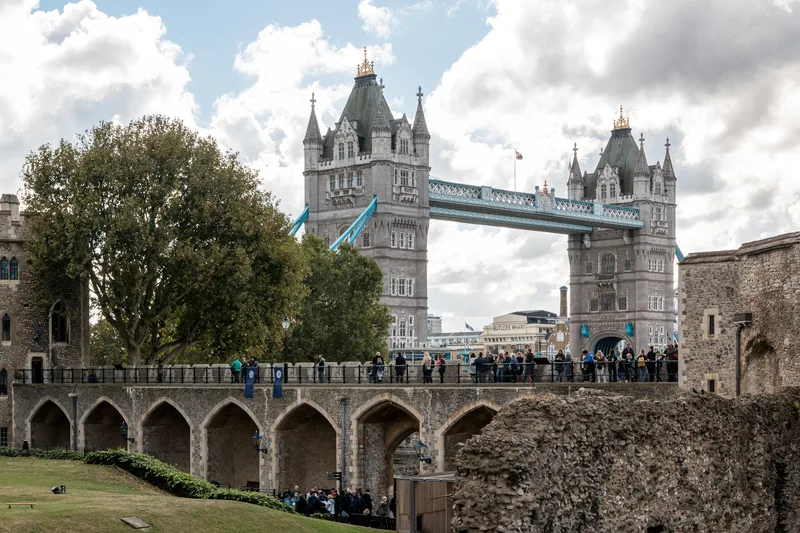
The Bridge was built “to ease road traffic while maintaining river access to the busy Pool of London docks.” The Pool was still a working harbour. Any new crossing had to let tall ships through, or the docks upriver would have been cut off. On 10 February 1876 the Corporation of London asked what is now City Bridge Foundation to establish a Special Bridge or Subway Committee. Over 50 designs were submitted to a competition. After that competition was abandoned in 1879, “architect Sir Horace Jones teamed up with civil engineer Sir John Wolfe Barry, to adapt his previously rejected design.” The Neo-Gothic style was “chosen so that it complemented the White Tower.” [source] [source] [source]
An Act, and an architect who did not live to see it
In November 1884, Sir Horace Jones unveiled three options. With Sir John Wolfe Barry, a bascule design with a central opening span was accepted. The new design went to the Court of Common Council on 28 October 1884, and to Parliament in November. The Corporation of London (Tower Bridge) Act received Royal Assent on 14 August 1885. That Act still matters: the City of London Corporation “is required to raise the Bridge to provide access to and egress from the Upper Pool of London for registered vessels with a mast or superstructure of 30 feet or more,” free of charge, with 24 hours’ notice, day or night, 365 days a year. [source] [source] [source]
Construction began on 22 April 1886. Sir John Wolfe Barry was Chief Engineer; Henry Marc Brunel, Assistant Engineer; Edward Cruttwell, Resident Engineer. Horace Jones “passed away just one year into construction, leaving Barry to complete the project over the next eight years.” The official facts page is plainer still: “Jones died one year into the Bridge’s construction and never got to see it finished.” [source] [source]
Eight years, 31 million bricks, and a first lift
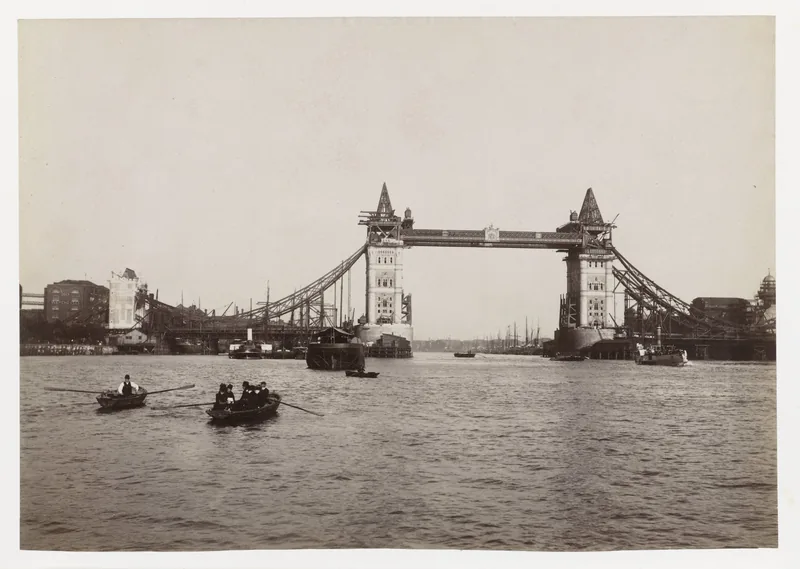
The first caisson was “sunk to a depth of almost 8m under the riverbed.” “It took eight years, five major contractors and the relentless labour of 432 construction workers each day.” Around 31 million bricks went into the work. The crests on top of the Towers are almost 63 metres above road level and are gilded with gold. The central span between the Towers is almost 66 metres. The two walkways stand 42 metres above the Thames and stretch 61 metres between the Towers. [source] [source]
In April 1894, Sir William Armstrong’s engineers lowered and raised the bascules for the first time. They were weight-tested on 21 June “with steam rollers, traction engines and loaded trollies exerting a pressure of 100 CWT (hundredweight) per square foot (54.68 tonnes per square metre).” The Bridge House Estates committee recorded that the work cost £1,184,000. [source]
A royal noon, and a cutter called Daisy
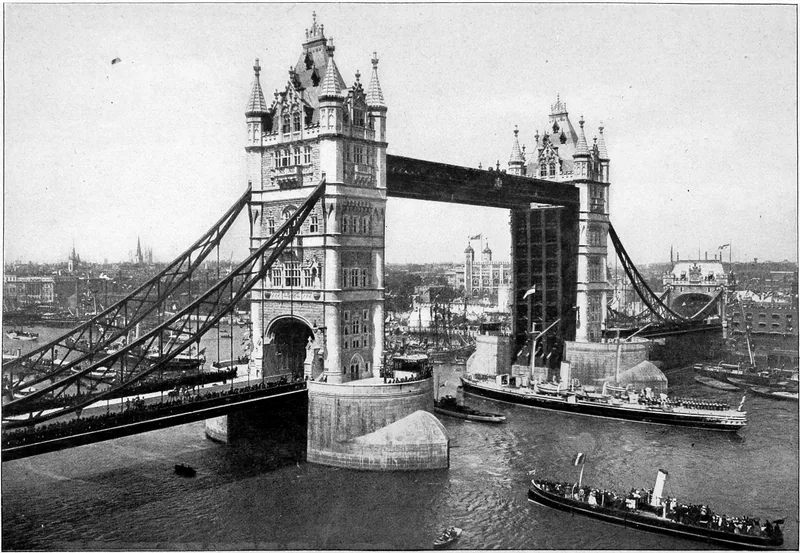
The Prince of Wales opened the Bridge at 12pm on 30 June 1894, “accompanied by his wife, Princess Alexandra, and his son, the Duke of York (the future King George V).” The first vessel through was the Harbour Master’s cutter, Daisy. A published print from that day shows the bascules raised; the file does not name the ships in the picture. [source]
On 9 July, pedestrians only, from 5am to 9pm, around 141,760 people crossed, and the Bridge was lifted 13 times for 15 ships. From 29 July it was open day and night. From that month, an estimated 8,000 horse-drawn vehicles and 60,000 pedestrians were crossing daily. In the first year it opened more than 6,000 times. [source] [source]
From steam to a glass floor, and a colour that changed twice
The original colour was “bright chocolate” brown, rumoured to be Queen Victoria’s favourite. That scheme “survived until battleship grey was applied as camouflage pre-WW2.” In 1977 it was “repainted the red, white and blue colours you can still see today, to celebrate Her Late Majesty The Queen’s Silver Jubilee.” The Southwark parts of the Bridge were listed on 6 December 1949; the North Tower, in Tower Hamlets, on 27 September 1973. [source]
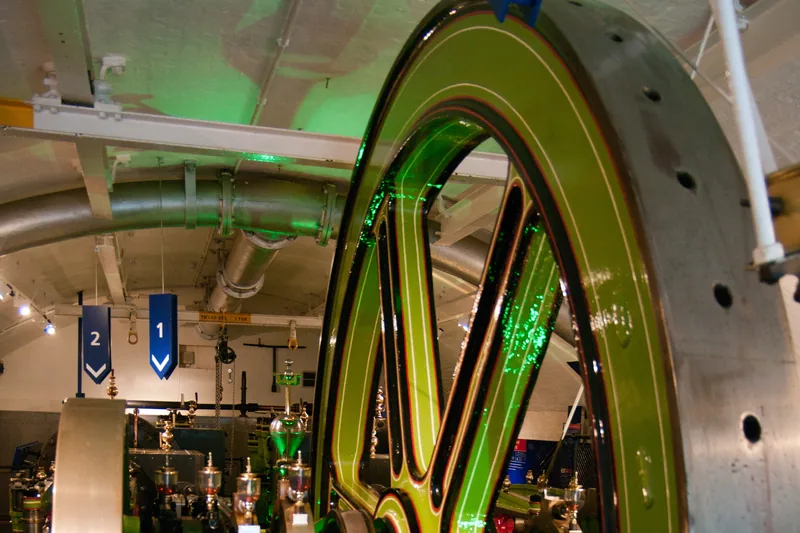
Steam ran the pumping engines until 1976, when an electro-hydraulic system took over. Visitors have been able to go inside since 1982, including the High-Level Walkways and the Victorian Engine Rooms. Glass floors were added to the walkways in 2014; official pages say they “can hold the weight of more than two black taxi cabs.” The Bridge is still raised, free of charge, for ships that need it, and is looked after by the charity City Bridge Foundation “at no cost to the taxpayer.” [source] [source] [source]
Enjoyed the Bridge?
No pop-ups. No intrusive advertising. Just interesting stuff. A little support helps the next landmarks site get built.